7 Proven I Ching Reading for Decision Making Tips That Work
Ancient Book of Chan
What Is the I Ching, Really?
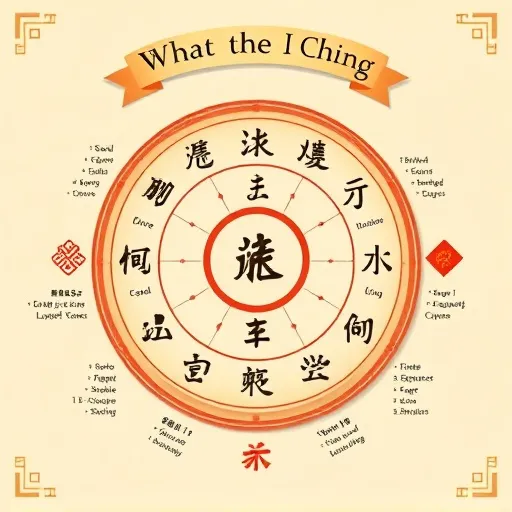
So you've probably heard about the I Ching — the "Book of Changes" — and wondered if it's legit or just some ancient fortune-telling gimmick. Fair question. This text is one of the oldest surviving documents in human history, with roots stretching back over three thousand years. At its heart sits a surprisingly elegant system: 64 hexagrams, each one built from six stacked lines that are either broken (yin) or solid (yang). Think of these hexagrams as archetypal snapshots of change — little freeze-frames showing how energy, circumstance, and human intention collide in any given moment. That's the foundation of any i ching reading for decision making.
Here's what makes it weirdly relevant in 2026: the I Ching doesn't actually tell you what to do. It won't pick your lottery numbers or promise you a promotion. Instead, it maps the dynamics of whatever situation you're facing and invites you to see your decision from an angle you totally missed. Think of it less as a crystal ball and more as a mirror held up to your own intuition — one that's been seasoned with a few thousand years of accumulated wisdom about human nature. When people talk about an i ching reading for decision making, this reflective quality is exactly what they mean.
The Ancient Structure: Trigrams, Hexagrams, and Changing Lines in Chinese Divination
Each hexagram gets built from two trigrams — three-line combos that represent fundamental forces like heaven, earth, water, fire, thunder, wind, mountain, and lake. The interplay between the lower and upper trigram gives each hexagram its distinct personality. On top of that, individual lines can be "changing" (moving) lines, which generate a second, future-oriented hexagram. This is where the real nuance lives — and honestly, where tons of beginners get completely lost. An i ching reading for decision making becomes far richer once you understand these shifting layers.
Why the I Ching Reading for Decision Making Beats Your Spreadsheet Frameworks
Here's the thing most people miss. Your typical decision-making frameworks — SWOT analyses, cost-benefit matrices, decision trees — are fantastic at organizing what you already know. But they're absolutely terrible at surfacing what you're avoiding. That's precisely where an i ching reading for decision making shines. A well-conducted session delivers some genuinely useful stuff:
- Perspective-shifting: A hexagram can reframe your whole problem so completely that you suddenly realize you've been asking the wrong question all along — a classic hallmark of i ching reading for decision making.
- Timing awareness: The book obsesses over when to act versus when to wait — a dimension most analytical tools flat-out ignore.
- Emotional honesty: Because the reading process is slow and ceremonial, it forces you to sit with your question rather than react to it.
- Bias interruption: You can't game the outcome, which makes i ching reading for decision making a surprisingly effective counterweight to confirmation bias and analysis paralysis.
- Actionable symbolism: The imagery — a well, a cauldron, a wandering traveler — sticks in your mind and keeps working on you for days afterward.
Notice what's not on that list: "predicts the future with certainty." If that's what you're after, you'll be disappointed. But if you want a thinking partner that's patient, non-judgmental, and occasionally unnervingly perceptive, an i ching reading for decision making might just become your secret weapon.
How to Frame a Good Question for Your I Ching Reading for Decision Making
Ninety percent of a disappointing reading traces back to a poorly framed question. The I Ching responds best to open, honest, present-focused inquiries. Here are the principles worth following in 2026 for any i ching reading for decision making:
1. Ask "How" and "What" Instead of "Will I" in Your I Ching Reading for Decision Making
Questions like "Will I get the job?" reduce a rich situation to a boring binary. The oracle tends to give flat, unhelpful answers to those. Instead, try: "How should I approach this career transition?" or "What do I need to understand about this relationship?" You'll get way more texture from your i ching reading for decision making.
2. Focus on Yourself Before Others in Any Personal I Ching Reading
Ethically and practically, a personal I Ching reading works best when you ask about your own role, attitudes, and choices. Asking "What is my colleague really thinking?" is both unreliable and a little invasive. Asking "How can I navigate this workplace tension skillfully?" is fair game and far more useful. That's the ethical sweet spot for i ching reading for decision making.
3. Be Specific Enough to Be Useful in Your I Ching Reading for Decision Making
"Should I change my life?" is way too vague. "Should I accept the offer to relocate for this role, given my family situation?" is specific. Specificity doesn't limit the reading — it sharpens it. Your i ching reading for decision making is only as good as the question you bring.
4. Write It Down Before You Cast Your I Ching Reading for Decision Making
Before you throw coins or tap a digital casting tool, write your question on paper. Let it sit for a minute. If it still feels right, proceed. This tiny ritual does wonders for calming the monkey mind — and it's a game-changer for i ching reading for decision making.
The Practical Workflow: Casting Coins and Interpreting Hexagrams
There are two main ways people cast a hexagram. The traditional three-coin method assigns values to each coin toss, building the hexagram line by line from the bottom up. A faster approach uses yarrow stalks (or a digital yarrow simulation, which has gotten increasingly sophisticated in recent years). Most people today use either physical coins or a reputable app — both are fine, and the tool matters far less than your intentionality going in. The magic of i ching reading for decision making lives in your focus, not your hardware.
Step-by-Step: A Reading You Can Actually Use for Decision Making
- Set the context. Find a quiet spot, silence your phone, and take three slow breaths. Briefly restate your question.
- Cast the hexagram. Six lines, bottom to top. Note which lines are changing (moving).
- Identify your primary hexagram. This represents the current situation or the core theme.
- Identify the changing lines. These are your actionable insights — the pivot points carrying the most weight.
- Identify the resulting hexagram. If you have changing lines, they flip into their opposites to form a second hexagram, often pointing toward where things are heading if you act on the guidance.
- Read, reflect, and journal. Look up interpretations in a translation you trust, then write two or three sentences about how each image connects to your lived reality. Don't skip this — reflection is where the value of i ching reading for decision making actually lands.
A Quick Example of I Ching Reading for Decision Making in Action
Say you're torn about whether to leave a stable job for a riskier venture. Your primary hexagram might emphasize retreating or waiting, while a changing line points to the value of inner preparation rather than outward movement. The resulting hexagram might emphasize increase or gradual progress. Put together, a sensible interpretation might be: "The timing isn't yet favorable for an outward leap, but significant progress is available if you spend the next few months building your foundation." Notice how that's not a yes-or-no answer — it's a strategy. That's the real power of i ching reading for decision making.
Common Mistakes Beginners Make with I Ching Reading for Decision Making
Even with the best intentions, it's easy to fumble a reading. Here's what to watch out for:
- Reading the same question repeatedly until you get a "nice" hexagram. This is the I Ching equivalent of refreshing your email for good news. Pick one casting and sit with it.
- Treating the text as a magic 8 ball. If you're looking for an oracle to make the decision for you, you've missed the point entirely.
- Ignoring your gut reaction. Your immediate emotional response to a hexagram is often more valuable than any interpretative commentary.
- Skipping the changing lines. Many beginners read only the primary hexagram. The changing lines frequently contain the most actionable guidance for i ching reading for decision making.
- Not journaling. A reading you don't write down is a reading you'll forget within a week.
The Analytical Side: What a Modern I Ching Reading for Decision Making Can and Can't Do
As someone who straddles the worlds of data analysis and reflective practice, I like being crystal clear about the epistemics here. The I Ching is not a predictive engine in any verifiable sense. It hasn't been validated by controlled studies, and I'd be skeptical of any source claiming otherwise. What it is — and what makes it genuinely valuable in 2026 — is a cognitive aid: a structured prompt that pushes you out of habitual thinking patterns. That framing is the honest way to approach i ching reading for decision making.
There's a solid argument that the value lives largely in the ritual and the reflection, not the cosmology. But here's the counterpoint: for thousands of years, serious people — strategists, poets, statesmen, and yes, plenty of business professionals — have used this framework to think more carefully about consequential choices. That's not nothing. Even if you treat the mechanism as opaque symbolism, the output is a richer, more considered decision process. And honestly, that's worth a few minutes and three coins. An i ching reading for decision making won't replace your brain — it complements it.
What it can't do: resolve factual uncertainty (it won't tell you whether a market is about to turn), replace professional advice (medical, legal, financial), or make the hard choices for you. Use it alongside your reasoning, not instead of it.
Integrating Your I Ching Reading into a Real Decision-Making Process
The most effective modern approach treats an I Ching consultation as one input in a broader decision hygiene routine. Here's how I'd sequence it:
Stage 1: Gather the Facts Before Your I Ching Reading for Decision Making
Do your analytical homework first — the spreadsheets, the conversations, the expert opinions. The I Ching is not a substitute for information gathering.
Stage 2: Conduct the I Ching Reading for Decision Making with Full Presence
Once you have the facts in hand, sit with the I Ching. You'll be amazed at how the symbolic imagery interacts with the details you've been mulling over. Often, your i ching reading for decision making will spotlight exactly the tension you haven't been able to articulate.
Stage 3: Extract a Clear Principle from Your I Ching Reading for Decision Making
From the hexagrams and any relevant commentary, distill one or two sentences of guidance. "Act incrementally." "Wait for clarity." "Lead by nurturing rather than pushing." Write it on a sticky note. This distillation step is what turns an i ching reading for decision making into actual actionable insight.
Stage 4: Act and Review Your I Ching Reading for Decision Making
Make your decision, then revisit your notes in 30, 60, and 90 days. How did the reading's themes play out? This reflective loop is where the practice genuinely grows your decision-making muscle over time — and it's why i ching reading for decision making rewards consistency.
Stage 5: Give Back to the Process of I Ching Reading for Decision Making
The I Ching has a strong ethical dimension — many translations emphasize humility, respect for others, and integrity. Let the guidance shape not just what you do but how you do it. That's the real spirit of the book, and it's what elevates i ching reading for decision making from parlor trick to genuine practice.
Does It Matter Which Translation You Use for I Ching Reading for Decision Making?
Yes — more than most guides admit. There are broadly three flavors:
- Classical scholarly translations that stay close to the original Chinese, rich in metaphor but occasionally dense.
- Modern practical editions that prioritize plain-language interpretation and often carry a self-help bent.
- Digital reading platforms that integrate casting, commentary, and journaling into a single app-based workflow — increasingly popular in 2026, given how much of daily life now runs through mobile interfaces.
My advice: pick one readable translation, note which edition you're using alongside each reading, and stick with it for a few months. Consistency of source helps you build a coherent interpretive vocabulary — and that makes every i ching reading for decision making smoother and more meaningful.
Ethics, Money, and Getting I Ching Readings Done for You
A word of caution. The popularity of online readings has spawned a cottage industry of paid services, some excellent and some… less so. If you're considering a professional reading, look for practitioners who are transparent about their approach, avoid fear-based upselling, and don't claim to predict your future with certainty. A good reader will tell you plainly that they're helping you think, not decreeing your fate. That transparency is the mark of ethical i ching reading for decision making guidance.
And a quick note: it's entirely reasonable to keep your readings private. You don't owe anyone an explanation about this part of your life.
The older I get — and the more decisions I've had to make — the more I've come to appreciate how much clarity comes not from having more data but from seeing the same situation from a different angle. An i ching reading for decision making is, at its best, a deliberate way of changing your vantage point. It slows you down. It asks better questions. It reminds you that timing, character, and integrity matter as much as spreadsheets. So the next time you find yourself stuck, consider this: gather your facts, then take twenty minutes with three coins and a pen. Try an i ching reading for decision making — you might not get a definitive answer, but you'll almost certainly end up with a better question. And often, that's the real breakthrough.
BaZi Chart Analysis
Understand your Four Pillars of Destiny and elemental balance
Feng Shui Consultation
Harmonize your environment with ancient spatial wisdom
Zodiac Compatibility
Explore relationships through the twelve animal signs
Frequently Asked Questions
What is the best way to formulate a question for an I Ching reading focused on decision making?
A well-crafted question should be open-ended, specific, and centered on your genuine uncertainty rather than a yes-or-no outcome. Frame it around what you need to understand or consider, not what you want to hear. This allows the reading to reveal nuanced guidance. Keep these three points in mind: focus on a single decision at a time, ask 'how' or 'what' instead of 'should I,' and avoid phrasing that assumes a fixed future.
How accurate is an I Ching reading for making real-life decisions in 2026?
Accuracy in I Ching readings is not measured like a scientific prediction; instead, it serves as a reflective tool that helps you examine a situation from multiple angles. Many practitioners report that its value lies in structured contemplation rather than forecasting certainty. Consider these aspects: it highlights overlooked factors, it encourages thoughtful timing, and its usefulness depends on your interpretation and follow-up actions.
Can I use an I Ching reading for business or career decisions, or is it only for personal matters?
The I Ching can be applied to business and career decisions as long as you treat it as a decision-clarification framework rather than a guaranteed outcome generator. It is commonly used to explore timing, risk, and relational dynamics in professional contexts. Key applications include evaluating partnership timing, assessing whether to pivot or persist, and identifying hidden stakeholders or tensions.
How much should I expect to pay for a professional I Ching reading in 2026?
Pricing varies widely depending on the practitioner's experience, session length, and whether the reading is delivered live or in writing. In 2026, many independent practitioners offer sessions in a moderate range, while highly experienced readers may charge premium rates. Keep these factors in mind: ask what is included before booking, compare a few practitioners' published rates, and be cautious of unusually high prices without clear credentials.
Is it safe to rely on an I Ching reading for high-stakes decisions like major investments?
An I Ching reading should not replace financial, legal, or medical professionals when stakes are high; it is best used as a supplementary reflection tool. Responsible practitioners explicitly frame readings as guidance for contemplation, not as guarantees. Follow these safeguards: consult qualified professionals for regulated advice, use the reading to surface questions you may have missed, and never commit significant resources based solely on a reading.
How do I choose a reputable I Ching reader or platform in 2026?
Look for transparency about method, clear boundaries about what a reading can and cannot do, and a track record of thoughtful client feedback. Avoid anyone who promises certain outcomes or pressures you into repeat purchases. Evaluate these signals: published ethics or disclaimer statements, sample readings showing depth rather than fear-based messaging, and reasonable pricing with no aggressive upsells.
What is the difference between asking one question versus multiple questions in a single I Ching session?
Traditional practice favors one clear question per casting so the resulting hexagram can be interpreted with focus and coherence. Asking multiple questions at once often muddies the reading and makes interpretation ambiguous. Best practices include: prioritize your most pressing decision, reserve additional questions for a separate session, and write your question down before casting to stay disciplined.
Can an I Ching reading help when I am feeling too anxious or emotional to decide?
A reading can serve as a grounding ritual that slows down reactive thinking and invites structured reflection, which is especially helpful under stress. However, it works best when paired with emotional regulation and, if needed, professional support. Consider these steps: calm yourself before casting, treat the result as a prompt for journaling rather than an order, and revisit the reading after a night's sleep before acting.
How should I interpret a hexagram that seems negative or discouraging for my decision?
Challenging hexagrams are typically read as invitations to adjust timing, attitude, or approach rather than as fixed bad omens. Skilled interpretation looks for the specific warning or condition embedded in the text and connects it to practical next steps. Focus on these responses: identify the concrete risk being flagged, consider delaying or modifying your plan, and look for the line or nuance that suggests a constructive path forward.
Do I need to learn the full I Ching system before using it for decisions, or can beginners start right away?
Beginners can absolutely start with guided readings or reputable introductory resources, then deepen their understanding over time. What matters most is approaching the practice with patience and reflective intent rather than rushing to conclusions. A practical starting path includes: begin with a reliable translation and clear casting instructions, keep a decision journal linking readings to outcomes, and study one hexagram at a time to build fluency.