How to Read Four Pillars of Destiny: 5 Key Steps for Beginners
Four Pillars of Dest
What Are the Four Pillars of Destiny?
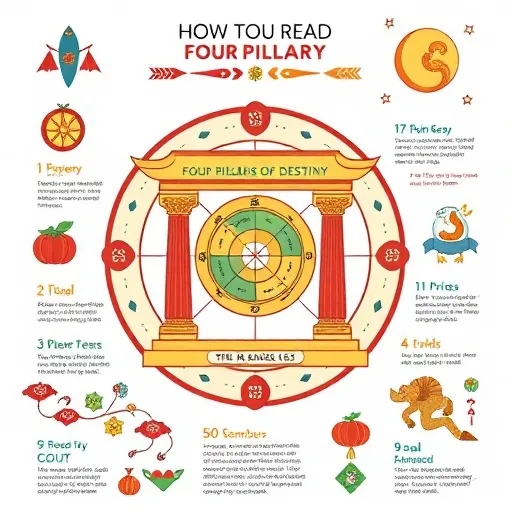
So you want to learn how to read four pillars of destiny? Great choice — but before we dive into charts and calculations, let's get clear on what this system actually is. At its heart, the Four Pillars of Destiny is a framework that takes your exact birth moment and maps it onto a grid of four columns. Each column represents a different time unit: the year pillar, the month pillar, the day pillar, and the hour pillar. Every pillar holds two characters — a Heavenly Stem sitting on top and an Earthly Branch below. That's eight characters total, which is exactly why people call this system Bazi or the "eight characters." If you're serious about how to read four pillars of destiny, this eight-character grid is your starting point.
What makes this system so elegant is how simple the building blocks are. Four pillars. Eight characters. Ten Heavenly Stems. Twelve Earthly Branches. Five elements — Wood, Fire, Earth, Metal, and Water. That's the entire alphabet. Everything beyond that is combination, interaction, and interpretation. The real complexity — and this is where how to read four pillars of destiny gets interesting — comes from how these pieces interact with each other: clashes, combinations, hidden stems, seasonal strength, and the flow of qi through the entire chart.
Before you can interpret anything meaningful, you've gotta know what each pillar actually governs:
- Year Pillar: Your ancestry, early environment, social context, and how the outside world perceives you
- Month Pillar: Career, parents, formative influences, and the seasonal strength that determines elemental power
- Day Pillar: The self (your Day Master) and your spouse or closest partner — this is the most important pillar in the whole chart
- Hour Pillar: Children, later life, inner aspirations, and the private self
Understanding this framework is the first real step in how to read four pillars of destiny. Without it, you're just staring at symbols. With it, you're looking at a map of a life.
The Foundational Building Blocks of Heavenly Stems, Earthly Branches, and Five Elements
To read any chart, you've got to become fluent in the basic vocabulary. There are ten Heavenly Stems and twelve Earthly Branches, and every single one carries an elemental signature. The five elements — Wood, Fire, Earth, Metal, and Water — are the true language of the chart. Every character is a carrier of elemental energy, and the whole reading revolves around how those energies relate to one another. This is fundamental to how to read four pillars of destiny.
The five elements don't exist in isolation — they interact through two primary cycles:
- Productive cycle: Wood feeds Fire, Fire creates Earth (ash), Earth generates Metal, Metal carries Water, Water nourishes Wood
- Controlling cycle: Wood parts Earth, Earth absorbs Water, Water extinguishes Fire, Fire melts Metal, Metal cuts Wood
When you read a chart, you're constantly asking: which elements are strong, which are weak, which are supported, and which are under pressure? This elemental balance — or imbalance — is the heart of any Four Pillars of Destiny analysis. It's also the lesson most beginners skip when learning how to read four pillars of destiny.
Each Heavenly Stem and Earthly Branch is also either yin or yang. This polarity adds texture to the reading. A yang Wood Day Master expresses differently than a yin Wood Day Master, even if their elemental makeup is similar. Paying attention to yin and yang polarity sharpens your interpretation and prevents generic readings.
Step One in How to Read Four Pillars of Destiny: Identify Your Day Master
The Day Master is the Heavenly Stem of the Day Pillar, and it represents your core self. Everything in the chart is read in relation to it. Is the Day Master strong or weak? Is it supported by the seasonal strength? Does it have allies in the chart, or is it isolated? No matter how advanced you get with how to read four pillars of destiny, you always start here.
Here's a simple process:
- Locate the Day Pillar (third column from the left in most chart layouts)
- Identify the Heavenly Stem on top — this is your Day Master
- Note its element and yin and yang polarity
- Assess its strength by checking seasonal support (the Month Branch), root strength (hidden stems in branches), and the presence of supportive elements
For example, a Wood Day Master born in spring is generally strong because Wood is in season. That same Day Master born in autumn is likely weaker, since Metal dominates the season and controls Wood. This seasonal assessment — called "seasonal command" — is one of the most important factors in determining useful gods and favorable elements. Get this wrong, and how to read four pillars of destiny becomes a guessing game.
Step Two in How to Read Four Pillars of Destiny: The Month Branch and Seasonal Strength
The Month Branch is the most powerful character in the chart because it governs the season of birth. It determines which elements are prosperous, which are declining, and which are dead or trapped. Experienced practitioners always begin their analysis here — it's non-negotiable for how to read four pillars of destiny.
Each Earthly Branch corresponds to a month and a season:
- Tiger, Rabbit, Dragon: Spring — Wood prospers
- Snake, Horse, Goat: Summer — Fire prospers
- Monkey, Rooster, Dog: Autumn — Metal prospers
- Pig, Rat, Ox: Winter — Water prospers
The Earth branches — Dragon, Goat, Dog, and Ox — are transitional months and carry strong Earth energy. Understanding these seasonal dynamics gives you the lens through which every other character should be read.
Step Three in How to Read Four Pillars of Destiny: Mapping the Ten Gods
The Ten Gods are relationship archetypes that describe how each character in the chart relates to the Day Master. This is where Four Pillars of Destiny becomes genuinely interpretive rather than merely descriptive. The Ten Gods include:
- Friend and Rob Wealth: Same element as the Day Master — peers, siblings, competitors
- Eating God and Hurting Officer: Output elements — creativity, expression, children
- Direct Wealth and Indirect Wealth: Controlled elements — money, resources, results
- Direct Officer and Seven Killings: Controlling elements — authority, discipline, pressure
- Direct Resource and Indirect Resource: Producing elements — support, learning, mentors
When you map the Ten Gods across all four pillars, patterns emerge. A chart heavy with Wealth stars suggests a life oriented around resources and results. A chart dominated by Resource stars points toward learning, contemplation, and support from others. A chart with strong Output suggests creativity and communication. Recognizing these patterns is a huge part of how to read four pillars of destiny.
The key insight? No Ten God is inherently "good" or "bad." Each has a healthy expression and an unhealthy one, depending on the overall balance of the chart. Direct Officer can mean honorable authority or oppressive rules. Seven Killings can mean disciplined power or chaotic pressure. Context is everything.
Step Four in How to Read Four Pillars of Destiny: Interactions Between Pillars
Now we hit the dynamic layer. Characters in a chart don't sit still — they interact. The primary interactions to look for are combinations, clashes, and subtler relationships like harm, destruction, and punishment.
Certain pairs of branches combine to form new elemental energies. For example, the Rat and Ox combine to form Earth, while the Tiger and Pig combine to form Wood. Combinations can transform the nature of the characters involved, shifting the elemental balance of the entire chart. Then there are clashes — pairs that oppose and destabilize one another. The Rat and Horse clash, the Tiger and Monkey clash, the Rabbit and Rooster clash, and so on. Clashes often indicate movement, change, or tension in the areas of life governed by those pillars.
Beyond that, there are harm, destruction, and punishment relationships that tend to indicate friction, obstacles, or recurring patterns of difficulty. They're not catastrophes — they're pressure points that require awareness. Learning to spot these interactions is what separates a surface-level reading from a genuinely insightful one, and it's a skill you absolutely need for how to read four pillars of destiny at a professional level.
Step Five in How to Read Four Pillars of Destiny: Useful Gods and Favorable Elements
Once you've assessed the Day Master's strength, mapped the Ten Gods, and examined interactions, you're ready to determine the useful god — the element or elements that best balance the chart. This is where the reading becomes actionable.
- If the Day Master is too strong, you need elements that drain, control, or weaken it
- If the Day Master is too weak, you need elements that support or strengthen it
- If the chart is too hot, you need cooling elements; if too cold, warming elements
- If the chart is too dry, you need moisture; if too damp, you need dryness
The useful god is the element that brings the chart into balance. Favorable elements support the useful god; unfavorable ones push the chart further out of balance. This framework lets you make practical recommendations about career paths, environments, colors, directions, and lifestyle adjustments — all grounded in the chart's specific needs. This step is where how to read four pillars of destiny shifts from theory into real-world application.
Step Six in How to Read Four Pillars of Destiny: Reading the Chart as a Whole Narrative
Here's where most beginners get stuck: they analyze each pillar in isolation and never synthesize. A real reading weaves everything into a coherent story. The Year Pillar describes the stage; the Month Pillar describes the launch; the Day Pillar describes the protagonist; the Hour Pillar describes the destination. Ask yourself: What's the dominant theme? Where is the energy concentrated? What are the major tensions and supports? What does the flow of qi look like from year to hour? This narrative approach is what makes how to read four pillars of destiny genuinely useful — it's about understanding tendencies, strengths, and blind spots, not predicting fixed events.
Common Mistakes to Avoid When Learning How to Read Four Pillars of Destiny
Even experienced readers fall into traps. Overweighting one character, ignoring seasonal strength, treating Ten Gods as fixed labels, forgetting hidden stems, making deterministic claims, and skipping the interaction layer are the biggest ones. Avoiding these pitfalls will dramatically improve your accuracy — and they're especially important when you're first learning how to read four pillars of destiny.
Realistically, you can learn the structure in a few weeks, identify the Day Master and map the Ten Gods within a few months, but mastery takes years of practice. Memorize the stems, branches, and elements, practice on your own chart and your friends' charts, study classical texts alongside modern interpretations, and read as many charts as possible. Consistency beats intensity every time. And remember — whether you're exploring for personal insight or professional study, how to read four pillars of destiny rewards patient, curious practice above all else.
BaZi Chart Analysis
Understand your Four Pillars of Destiny and elemental balance
Feng Shui Consultation
Harmonize your environment with ancient spatial wisdom
Zodiac Compatibility
Explore relationships through the twelve animal signs
Frequently Asked Questions
What exactly are the Four Pillars of Destiny, and how can a beginner start reading them?
The Four Pillars of Destiny is a traditional Chinese astrological system that maps a person's birth year, month, day, and hour into four pairs of heavenly stems and earthly branches. To begin reading them, you first need to convert your birth data into the correct solar calendar and identify the stem-branch combination for each pillar. Then, analyze the interactions between the five elements (Wood, Fire, Earth, Metal, Water) present in the chart. Start by focusing on the Day Pillar, which represents the core self, and gradually expand to the other pillars for a holistic view.
How accurate is reading the Four Pillars of Destiny, and what factors influence its reliability?
The accuracy of Four Pillars reading depends heavily on the precision of the birth data and the interpreter's expertise, as the system is a symbolic model rather than a deterministic science. Small errors in birth time can shift the hour pillar and alter element balances, leading to different interpretations. Additionally, the skill and experience of the practitioner play a crucial role in how well the chart is contextualized with modern life events.
Is it safe to use online tools or apps to read my Four Pillars chart, and what privacy concerns should I consider?
Using online tools can be convenient for generating a basic chart, but you should be cautious about sharing sensitive personal data such as full birth date, time, and location. Many free platforms may store or misuse your information, so it is wise to review privacy policies and avoid entering identifiable details unless necessary. For deeper analysis, consider consulting a trusted professional rather than relying solely on automated tools.
How much does it typically cost to get a professional Four Pillars reading in 2026?
Professional Four Pillars readings in 2026 vary widely in cost depending on the practitioner's reputation, the depth of analysis, and the consultation format (online vs. in-person). Basic chart interpretations may range from modest fees, while comprehensive sessions with experienced consultants can command higher prices. Many practitioners now offer tiered packages, so it's advisable to compare offerings and clarify what is included before booking.
What are the key differences between reading the Day Pillar versus the Year Pillar in Four Pillars analysis?
The Day Pillar represents the core self, including personality, inner drives, and immediate life circumstances, while the Year Pillar often relates to ancestry, early environment, and public persona. In practice, the Day Pillar is considered the most personal and is central to understanding individual tendencies, whereas the Year Pillar provides context about family background and societal influences. A balanced reading integrates both to avoid overemphasizing one aspect.
Can the Four Pillars of Destiny be used to make major life decisions, such as career or marriage?
The Four Pillars system is traditionally used as a reflective tool for understanding tendencies and timing, but it should not be the sole basis for major life decisions. It can offer insights into strengths, potential challenges, and favorable periods, yet practical considerations, personal agency, and professional advice remain essential. Many practitioners advocate using it alongside critical thinking and real-world factors rather than as a deterministic guide.
How can I verify the credibility of a Four Pillars practitioner or resource?
To assess credibility, look for transparent credentials, client testimonials, and a clear methodology that avoids absolute claims or fear-based tactics. A reputable practitioner should be willing to explain their approach, acknowledge limitations, and provide references upon request. Avoid individuals who guarantee specific outcomes or pressure you into expensive services without clarification.
What common mistakes should beginners avoid when first learning to read the Four Pillars?
Beginners often overfocus on one element or pillar while ignoring the dynamic interactions across the whole chart, leading to fragmented interpretations. Another common mistake is neglecting the influence of solar terms and birth time precision, which can skew the entire analysis. It's also easy to misinterpret symbolic language literally rather than understanding it as a system of tendencies and relationships.
Are there any ethical considerations when reading Four Pillars for others, especially regarding sensitive topics?
Ethical reading requires respecting the client's autonomy, avoiding fear-based interpretations, and not using the chart to justify harmful decisions or discrimination. Practitioners should frame insights as possibilities rather than certainties and encourage clients to seek professional advice for health, legal, or financial matters. Confidentiality and informed consent are also essential when discussing personal birth data.
How has the practice of reading Four Pillars evolved with modern technology and online learning in 2026?
In 2026, digital tools and online courses have made Four Pillars learning more accessible, with interactive calculators, virtual workshops, and global communities available to enthusiasts. However, this ease of access also means a flood of unverified information, so learners must critically evaluate sources and seek structured mentorship. Technology has streamlined chart calculation, allowing practitioners to focus more on interpretation and contextual analysis.