7 Chinese Astrology Secrets for 2026: Read Your Birth Chart
Chinese astrology ti
What Is Chinese Astrology, Really?
So what exactly is chinese astrology? At its core, it's a system that maps time onto a repeating cycle of twelve animal signs, layered with five elements and the constant push-pull of yin and yang. Here's where it gets interesting: unlike Western astrology, which reads the position of the sun, moon, and planets at your exact moment of birth, chinese astrology is built on the lunisolar calendar—a calendar that tracks both the phases of the moon and the sun's position throughout the year.
That distinction matters more than you'd think. Your sign isn't locked to a simple month-to-month window like it is in Western sun-sign astrology. In chinese astrology, your sign is tied to the Chinese lunar year, which usually kicks off in late January or early February. That's why two people born in the same January can walk away with completely different signs depending on where the Lunar New Year landed that year.
What makes chinese astrology so rich is its layered nature. You're not just an animal sign—you're an animal sign fused with an element (Wood, Fire, Earth, Metal, or Water), plus a yin or yang energy, plus a whole lot more once you dig into the birth chart. It's this depth that keeps people coming back to chinese astrology year after year.
The Twelve Zodiac Animals and Five Elements: A Quick Tour of the Chinese Zodiac
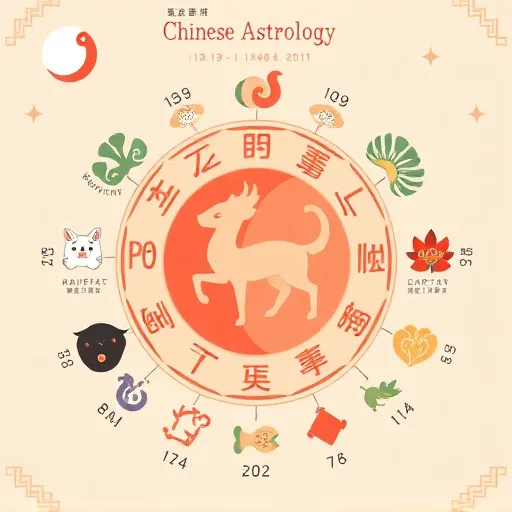
The twelve animal signs are probably the most well-known part of chinese astrology, and for good reason—they're memorable, relatable, and surprisingly accurate in describing broad personality tendencies. Each animal brings its own set of traits, strengths, and challenges to the table. Here's the lineup:
- Rat — Resourceful, quick-witted, and adaptable. Rats are natural problem-solvers, though they can be a bit guarded.
- Ox — Steady, reliable, and hardworking. Oxen value patience and tend to be the backbone of any team.
- Tiger — Bold, fearless, and competitive. Tigers love a challenge and often lead with instinct.
- Rabbit — Gentle, diplomatic, and refined. Rabbits are the peacekeepers of the zodiac, with a strong eye for aesthetics.
- Dragon — Charismatic, ambitious, and confident. Dragons tend to draw attention wherever they go.
- Snake — Wise, mysterious, and analytical. Snakes prefer to observe before they act.
- Horse — Energetic, independent, and adventurous. Horses thrive on movement and freedom.
- Goat (or Sheep) — Creative, empathetic, and calm. Goats are often the artists and dreamers of the group.
- Monkey — Clever, playful, and inventive. Monkeys are the ultimate improvisers.
- Rooster — Diligent, honest, and detail-oriented. Roosters value precision and have strong opinions.
- Dog — Loyal, trustworthy, and protective. Dogs are the ones you want in your corner.
- Pig — Generous, warm, and sincere. Pigs are known for their big hearts and easygoing nature.
Now, here's the thing—your animal sign is only the beginning in chinese astrology. The real magic happens when you layer in the element. Each animal sign is also tied to one of the five elements, which adds a whole new dimension to your personality profile. A Wood Dragon, for example, is very different from a Metal Dragon, even though they share the same animal.
The Five Elements and Yin-Yang Balance: Wood, Fire, Earth, Metal, and Water
In chinese astrology, the five elements aren't just abstract concepts—they're active forces that interact with each other in cycles of creation and destruction. Understanding these interactions can give you a surprisingly deep read on your own tendencies and the dynamics of the people around you.
Wood Energy and Creative Growth in Chinese Astrology
Wood represents growth, creativity, and expansion. People with strong Wood energy are often visionaries, planners, and pioneers. They're the ones starting new projects and pushing boundaries. Too much Wood energy, though, can lead to restlessness or frustration when things don't grow as quickly as they'd like.
Fire Passion and Expressive Energy in Chinese Astrology
Fire is all about passion, expression, and visibility. Fire types are warm, charismatic, and often the life of the party. They're driven by inspiration and crave connection. But Fire can burn out quickly if it isn't fueled properly—so balance is key.
Earth Stability and Grounding Energy in Chinese Astrology
Earth is the stabilizer. It represents patience, practicality, and grounding. Earth people are the ones who keep things running smoothly. They're reliable and nurturing, though they can sometimes get stuck in routine or resist change.
Metal Clarity and Disciplined Structure in Chinese Astrology
Metal symbolizes clarity, discipline, and structure. Metal types are often analytical, organized, and fair-minded. They value rules and quality, but can sometimes come off as rigid or overly critical.
Water Wisdom and Intuitive Adaptability in Chinese Astrology
Water is the element of wisdom, intuition, and adaptability. Water people are deep thinkers, empathetic, and often creatively gifted. They go with the flow—sometimes literally—but can also be prone to overthinking or emotional drift.
In practice, the interplay between these elements is what makes chinese astrology so fascinating. If your chart is heavy on Fire and Wood, you're probably someone who's always launching new ideas and chasing big goals. Load up on Earth and Metal, and you're likely the grounded, dependable one everyone leans on.
The 2026 Year of the Fire Horse: What It Means for Your Zodiac Sign
Every year in the Chinese calendar carries its own energetic signature, defined by the animal sign and element of that year. In 2026, we're stepping into the Year of the Horse—specifically, the Fire Horse. In chinese astrology, this is a big deal.
The Horse is associated with energy, movement, freedom, and ambition. It's a sign that loves adventure and dislikes being tied down. When you add the Fire element into the mix, you get a year that's charged with passion, momentum, and a strong urge to break free from routine.
The last Fire Horse year was back in 1966, and if you know your history, you'll remember that was a time of significant cultural and social energy shifts. Every sixty years, the same combination of animal and element comes around again, making 2026 a year that many practitioners of chinese astrology consider highly dynamic and transformational.
So what does that mean for you in practical terms? Here are a few things to keep in mind:
- Expect acceleration. The Fire Horse year tends to speed things up. Projects that have been sitting idle may suddenly gain traction, and opportunities can appear without warning. Stay alert and be ready to move.
- Passion runs high—so does conflict. Fire amplifies emotions. While this can be great for creative work and romance, it can also lead to impulsive decisions or heated disagreements. Think before you react.
- Independence is the theme. The Horse resists being constrained. In 2026, you might find yourself craving more autonomy or making bold choices about your career, relationships, or living situation.
- Balance the elements. If you're naturally a Fire-heavy person, 2026 could feel like a lot. Pay attention to burnout. If you're more Earth or Water dominant, this year might give you the spark you've been missing.
Different signs will experience the Fire Horse year differently. Tigers and Dogs, for example, tend to pair well with the Horse's energy—they share a bold, action-oriented spirit. Rats, on the other hand, might feel a bit more friction, since their natural caution can clash with the year's fast-moving pace. That doesn't mean it's a bad year for Rats—just that they may need to adjust their approach.
It's also worth noting that the Fire Horse year is traditionally considered a time for transformation. If you've been thinking about a big career pivot, a major relocation, or finally pursuing that creative project you've been putting off, 2026 might be the moment to act.
How to Read Your Own Chinese Birth Chart and BaZi Four Pillars
One of the most rewarding aspects of chinese astrology is that it gives you a framework for self-reflection. Your birth chart is more than just your animal sign—it includes your element, your inner animal (sometimes called the secret animal), and a whole lot more depending on how deep you want to go.
Here's a simplified way to get started:
- Find your birth year sign. Look up the Chinese zodiac for the year you were born. Remember to check whether your birthdate falls before or after the Lunar New Year that year—if it's before, you belong to the previous year's sign.
- Identify your element. Each year has a specific element associated with it, cycling through Wood, Fire, Earth, Metal, and Water. Combine that with your sign, and you've got your base profile.
- Look at your inner animal. This is the sign associated with your birth month in the lunar calendar. It adds nuance to your personality and can reveal hidden strengths.
- Explore your full four pillars. For a deeper dive, you can look into the Four Pillars of Destiny (BaZi), which maps out your year, month, day, and hour of birth into a more detailed chart. This is where things get really interesting—and honestly, a little addictive.
You don't need to hire an expensive consultant to get started. There are plenty of reliable online tools and free calculators that can generate your basic chart in seconds. From there, you can start reading up on your specific combination and seeing how it lines up with your lived experience.
Chinese Astrology in Daily Life: Career Timing, Relationship Compatibility, and Wellness
Beyond the novelty of knowing your sign, chinese astrology has a lot of practical applications. Here are a few ways people actually use it:
Career Timing and Professional Moves
Many professionals—particularly in Asia, but increasingly worldwide—use yearly forecasts to plan career moves. The logic is simple: if certain years carry more momentum in certain areas (like career, relationships, or wealth), it makes sense to align your plans accordingly. In 2026's Fire Horse year, the energy favors bold moves and entrepreneurial ventures. If you've been waiting for the right time to start something new, this might be it.
Relationship Compatibility and Elemental Dynamics
Chinese astrology offers a structured way to think about relationship compatibility. While it's not a substitute for real communication, understanding the elemental dynamics between you and your partner can offer insights into areas of natural harmony and potential friction. For example, a Wood sign and a Water sign tend to complement each other well, while two Fire signs might spark—and sometimes clash.
Personal Wellness and Holistic Health
The five-element framework is closely tied to traditional wellness practices. Each element corresponds to specific organs, emotions, and seasonal rhythms. Understanding your dominant element can inform your approach to diet, exercise, and stress management. It's a holistic way of thinking about health that's been part of Chinese culture for millennia.
Day-to-Day Decision Making and the Chinese Almanac
Some people consult the Chinese almanac (Tung Shing) for guidance on everything from choosing a good day to sign a contract to picking a wedding date. It's a practice rooted in the belief that certain days carry more favorable energy than others. Whether you take it literally or just use it as a reflective exercise, it's a fascinating way to think about time.
Common Misconceptions About Chinese Astrology and Zodiac Signs
There are a few myths floating around that are worth clearing up:
- "Chinese astrology is just about the animal sign." False. The animal sign is only one layer. The elements, yin-yang balance, and the full birth chart are equally—if not more—important.
- "It's the same as Western astrology." Not at all. The two systems have different astronomical bases, different zodiac structures, and different interpretive frameworks. Comparing them is a bit like comparing chess and checkers—they both use a board, but they're different games.
- "It's purely superstition." While it's not scientifically validated in the Western sense, chinese astrology is a sophisticated cultural and philosophical system. Many people use it as a tool for self-reflection and personal insight, not as a literal prediction of the future.
- "Your sign determines your fate." In chinese astrology, your chart describes tendencies and potential—not fixed outcomes. Free will always plays a role. The stars may incline, but they don't compel.
At the end of the day, chinese astrology gives you the map—you're still the one driving the car. Whether you're a pragmatic Earth sign looking for direction or a free-spirited Horse ready to run, the cycles are always worth consulting.
BaZi Chart Analysis
Understand your Four Pillars of Destiny and elemental balance
Feng Shui Consultation
Harmonize your environment with ancient spatial wisdom
Zodiac Compatibility
Explore relationships through the twelve animal signs
Frequently Asked Questions
What exactly is Chinese astrology, and how does it differ from Western astrology?
Chinese astrology is a traditional system based on the lunar calendar, the Five Elements (Wood, Fire, Earth, Metal, Water), and the interaction of Yin and Yang, rather than the solar-based zodiac used in Western astrology. It emphasizes cyclical patterns of time and one's relationship with the environment. Key differences include: 1) Use of a 60-year cycle combining 12 zodiac animals and 5 elements; 2) Focus on birth year, month, day, and hour (Four Pillars) rather than just sun sign; 3) Integration of balance and harmony concepts rather than personality archetypes.
How can I use Chinese astrology for personal planning in 2026?
In 2026, a Fire Horse year, Chinese astrology can guide timing for major decisions by analyzing your birth chart's interaction with annual energies. Many practitioners suggest aligning activities with favorable elemental periods. Practical steps include: 1) Determine your birth element and zodiac sign to understand annual influences; 2) Consult a monthly forecast to identify auspicious dates for career or relationship moves; 3) Use elemental balancing (e.g., adding Water-related activities in a Fire year) to mitigate challenges.
Is Chinese astrology accurate for predicting future events?
Chinese astrology is not a deterministic prediction tool but a framework for understanding tendencies and cycles, similar to a weather forecast for personal energies. Its accuracy depends on the expertise of the practitioner and the precision of birth data. Many users find it valuable for self-reflection and timing rather than concrete predictions. Consider these points: 1) It highlights probabilities, not certainties; 2) Accuracy improves with exact birth time and location; 3) Results should be used as guidance, not absolute truth.
What are the costs involved in getting a professional Chinese astrology reading in 2026?
Professional Chinese astrology readings in 2026 vary widely in cost depending on the practitioner's reputation, session length, and depth of analysis. Basic online reports may range from affordable fixed fees, while in-depth personal consultations with experienced practitioners can be premium-priced. Factors include: 1) Type of reading (natal chart, annual forecast, compatibility); 2) Practitioner's credentials and experience; 3) Delivery format (automated report vs. live session).
How do I choose a reliable Chinese astrology practitioner or platform?
Selecting a trustworthy practitioner requires checking credentials, methodology transparency, and client feedback. Look for those who clearly explain their analytical approach and avoid guaranteed predictions. Key considerations: 1) Verify training lineage or certification in a recognized system (e.g., BaZi, Zi Wei Dou Shu); 2) Read reviews and ask about their interpretive style; 3) Avoid practitioners who use fear-based upselling or promise absolute outcomes.
Can Chinese astrology help with career and relationship decisions?
Yes, many people use Chinese astrology to gain insights into career strengths and relationship dynamics by analyzing elemental compatibility and timing. It can highlight favorable periods for job changes or partnerships. However, it should complement practical judgment. Benefits include: 1) Identifying career fields aligned with your elemental profile; 2) Understanding compatibility patterns with partners or colleagues; 3) Timing major transitions during supportive annual cycles.
What is the role of the Five Elements in Chinese astrology readings?
The Five Elements (Wood, Fire, Earth, Metal, Water) are foundational to Chinese astrology, representing dynamic forces that interact through generating and controlling cycles. A reading analyzes the balance of elements in your birth chart to suggest areas of strength or needed adjustment. Key roles: 1) Determine personality tendencies and health predispositions; 2) Guide remedial strategies (e.g., colors, activities); 3) Explain compatibility between people or periods.
How often should I get a Chinese astrology update or consultation?
Frequency depends on your goals: an annual update before the Lunar New Year is common for planning, while major life transitions may warrant a focused session. Most practitioners recommend a full natal chart analysis once, with annual or quarterly check-ins. Suggested cadence: 1) Annual forecast at the start of the lunar year; 2) Additional sessions before major decisions (marriage, business); 3) Monthly or quarterly reviews only if following a detailed action plan.
Is Chinese astrology compatible with modern scientific thinking?
Chinese astrology is a traditional cultural and philosophical system rather than a science, and it is best approached as a symbolic framework for reflection. Many modern users integrate it with psychological or coaching practices without claiming empirical validity. Points to consider: 1) It lacks scientific verification but offers cultural and personal meaning; 2) It can be used alongside evidence-based decision-making; 3) Practitioners increasingly frame it as a tool for self-awareness, not prediction.
What information do I need to provide for an accurate Chinese astrology reading?
An accurate reading requires your exact birth date, time, and location, as these determine the Four Pillars (year, month, day, hour) and elemental balance. Some practitioners also ask for your gender and current concerns. Essential details: 1) Date of birth in the Gregorian or lunar calendar; 2) Exact time of birth (hour is critical for the hour pillar); 3) Birthplace for time zone and geographical adjustments.